
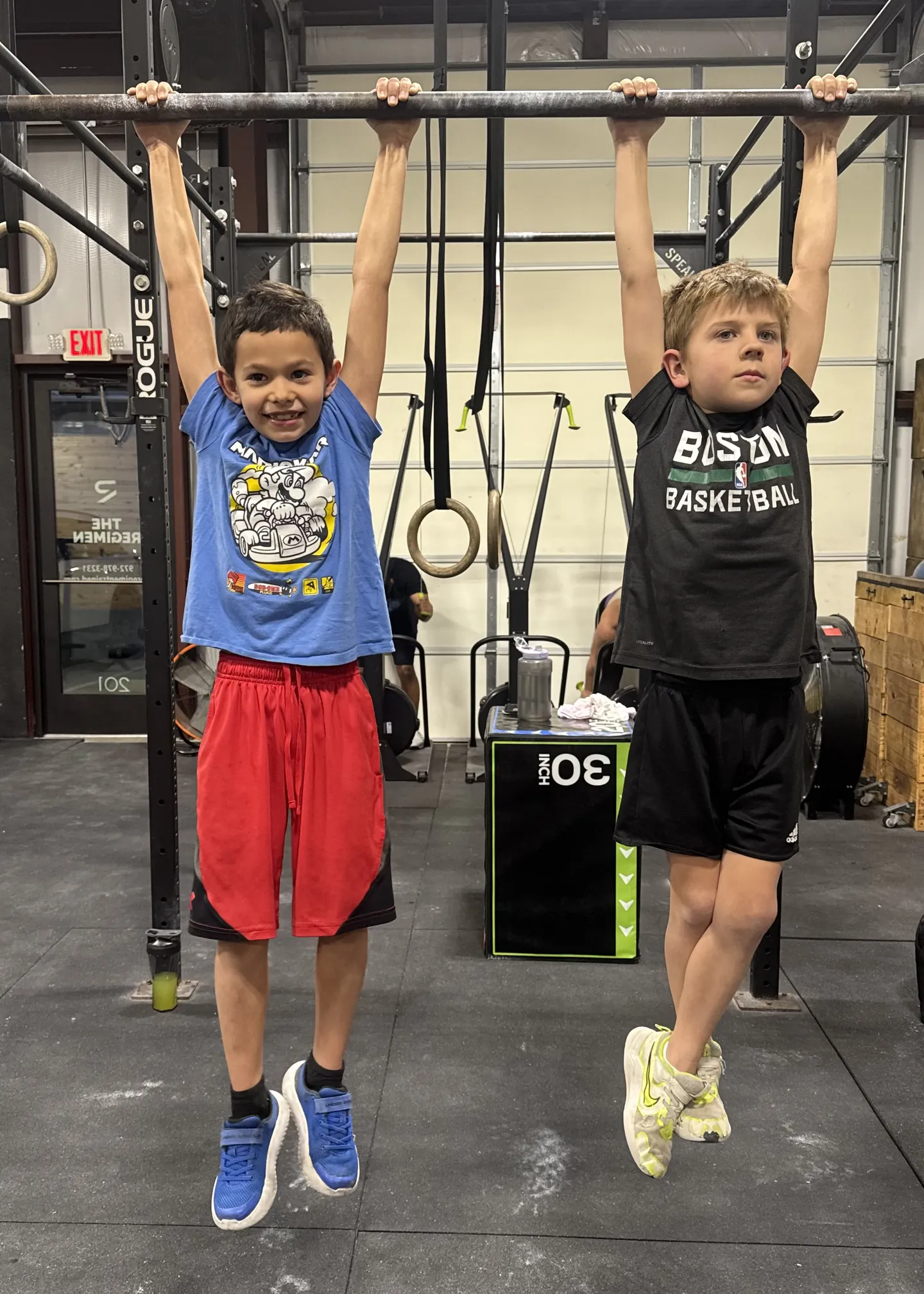
Look for coaching that matches the child—not just the workout.
Children vary in age, attention, coordination, confidence, and previous sports experience. Effective coaching explains movements clearly, provides manageable progressions, and notices when a child needs help or a different challenge.
Ask how the gym determines the appropriate class and how coaches respond when a child is nervous, distracted, or unfamiliar with a movement.
Structure and fun should support one another.
A kids class can be energetic without being chaotic. Clear transitions, simple expectations, and age-aware instruction help children understand what to do while leaving room for games and shared challenges.
Observe whether the fun reinforces movement, teamwork, listening, and effort rather than replacing the purpose of the class.
Ask how progress is defined.
Youth fitness does not need to revolve around adult benchmarks. Coordination, confidence, willingness to try, control, listening, and positive participation are meaningful signs of progress.
A strong program should be able to explain what it wants children to learn and how that goal changes as the child develops.
Choose a schedule the family can sustain.
A program only helps when attendance is realistic. Consider travel, school, meals, other sports, and whether the class time creates unnecessary stress for the child or parent.
The Regimen Trained currently lists Kids Class on Tuesday and Thursday in morning and evening windows. Confirm the current age range and availability before planning a visit.
A few more things to know.
Should kids use adult workout standards?
A youth program should use age-aware instruction and appropriate progressions rather than simply applying adult expectations to children.
Does a child need to play a sport first?
No. A well-coached class can introduce movement and coordination to children with different experience levels.
What should I ask before the first visit?
Confirm the current age range, class availability, what to bring, where parents should wait, and how the coach handles a child who is new or hesitant.